Connect with us

Black History

Race in America: Better or Worse, One Year After Charlottesville

Published

on

Washington, D.C. is ground zero this weekend for the white supremacists who left Charlottesville, Virginia bruised last year and exposed President Donald Trump’s affinity for their hateful, racist views when he failed to condemn their protests and described them as having “good people” in their midst.

The permit application for this year’s so-called “White Civil Rights Rally” indicates the one-year anniversary event will take place in Lafayette Square, located near the White House. There are reports David Duke and his supporters will protest in front of the White House.

“I think it just shows that the KKK, the neo-Nazis and the other white supremacists are celebrating,” says Dr. Ray Winbush. “They are celebrating Donald Trump. What we are seeing is people celebrating their racism.”  

Winbush, who is the director of the Institute for Urban Research at Morgan State, points out that deaths linked to racial justice often involve African Americans and the police. And, in most cases, there are few witnesses. Yet, last year in Charlottesville when a car rammed into a crowd of counter protesters, Heather Heyer was killed.

“Charlottesville was a modern and very, very public example of Black people and White people getting together with those in opposition to the white supremacist march and a death occurred,” Winbush says.

Heyer was a 32-year-old white woman.

“White women are very important in America,” Winbush states. “I was musing with my students. If it had been a black woman, a black man, or even a white man, things would have been different. But, Whites now have a recent martyr like Viola Liuzzo, and I think the country pays attention to that, both black and white Americans.”

In an ABC News report, Heyer’s mother, Susan Bro, says she is “not dwelling in hate.”

In anticipation of unrest, the state of Virginia has already declared a state of emergency. In Washington, D.C. law enforcement is preparing for tempers to flare. And, movie producer, Spike Lee, timed the release of his new movie, BlacKkKlansman, to coincide with the one-year anniversary of Charlottesville.

Lee is known to address race relations in his films. Throughout his more than 30-year career as a filmmaker, he has not shied away from art that offers an opportunity to talk about race in America. In an interview with TIME magazine, Lee recalled seeing Gone with the Wind while in college, and there was no conversation following the film he says to place the antebellum era in context nor was there discussion about the black actor, Butterfly McQueen who starred in it.

Winbush is cautious when he talks about Lee’s new film and its ability to foster a racial dialogue.

“I think this idea that we will have an American dialogue on race is an integrationist myth,” he says. “The idea is that you’ll have a truth and reconciliation commission like in South Africa. We attempted it in the 1990s under Bill Clinton, but that got sidetracked. We are in a bad place in this country. And, I hope Spike’s film achieves the national dialogue on race that he wants, but I don’t have much faith that it will happen.”

Many African Americans share the pessimism Winbush articulates. As the stories of whites calling the police on African Americans they think are in the wrong place such as the student at Smith College having lunch, the group of women playing golf, or the family eating at a Subway in rural Georgia, there is very little reason to believe the country is interested in a conversation about race.

According to Winbush, racism was “bad in the 60s, 70s, and 80s.” But, he adds, “This is the worst I have seen it in over 40 years.”

Black History

US Black Chambers of Commerce Makes History with Campus for Entrepreneurship

Published

on

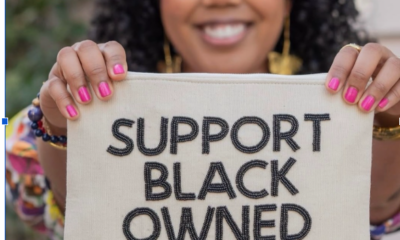
The U.S. Black Chambers of Commerce recently unveiled its new campus, which was the former BET headquarters, located on more than seven acres in the nation’s capital.

USBC President Ron Busby, said, “When I reflect on the journey of the U.S. Black Chambers over the past 16 years, I see a story of resilience, vision, and progress. This campus is the next chapter of that story — not just a building, but a living symbol of what happens when we claim our space, own our future, and build institutions that outlast us.”

For five years, Busby worked to bring his vision of a permanent home for the “voice of Black Business” to fruition. Relying on his faith and an impressive roster of supporters, he navigated a changing political landscape and uncertainty for businesses, large and small.

The USBC Innovation Campus is about more than today’s entrepreneurs; it’s about ensuring that generations to come inherit a place where their ideas, voices, and businesses can thrive,” he explained.

Amid the upheaval of today’s economy with its growing list of mass layoffs, increased tariffs and tightened access to capital, Black entrepreneurs are finding renewed hope in efforts to build a community that helps fuel their goals.

History is on their side.

Even during slavery, some free Blacks managed to establish small businesses, and for a very small number of the enslaved, there were limited opportunities to “hire themselves out” for income. After the Civil War and during Reconstruction, there was a sharp rise in Black business ownership as men and women embraced ways to exercise their freedom. Despite the frequent threats and incidents of violence, this commitment to claim their place in spaces that had been off-limits served only to fortify their determination.

The harsh reality of Jim Crow and its relentless discrimination created a demand for more Black businesses. Entrepreneurs provided services to their communities, even though many consumers had very little discretionary income. The “internal” economies that sprang up around the country employed other African Americans and led to Tulsa’s Black Wall Street and insurance companies like North Carolina Mutual Life Insurance Company and Atlanta Life Insurance Company. Madame C.J. Walker also emerged during this era.

“My object in life is not simply to make money for myself or to spend it on myself in dressing or running around in an automobile, but I love to use a part of what I make in trying to help others” she said.

Fast forward more than a century, and the development of a campus devoted exclusively to nurture Black entrepreneurship would have been among Walker’s and the ancestors’  wildest dreams. It certainly has been one of Ron Busby’s, and he would like to see the USBC Innovation Campus play a pivotal role in helping others realize theirs.  

Continue Reading

Black History

Meet Jolanda Jones and Borris Miles: Black Texas Lawmakers Fighting Redistricting

Published

on

The Texas House reconvened today, but failed to reach a quorum for the second day in a row as the Democrats, who left the state in an orchestrated effort to delay the state’s Republican-led legislature from moving forward with its redistricting map that would create five more GOP congressional seats, show no signs of returning home soon.

One of the Texas lawmakers who fled to New York, state Representative Jolanda Jones said that Texas Governor Greg Abbott is “trying to get soundbites” by threatening to arrest the lawmakers who have left the state.

President Donald Trump says the FBI “might have to” locate the lawmakers. Trump’s statement comes hours after Texas Governor Greg Abbott ordered the state police to locate the lawmakers. However, the civil arrest warrants that have been issued do not extend beyond the state of Texas, and the 50 Democrats involved in the redistricting protest are in predominantly blue states like Illinois and New York.

Jones held back tears as she discussed the decision she and her legislative colleagues have made.

“I can’t imagine living in a time with no voting rights; I can’t imagine living in a time with no civil rights, but that’s where we are,” Jones said. “Yes, it’s hard. I have a granddaughter. I adore her. I miss her, but I’m going to have to be okay with FaceTime because I can’t come back to see her. There’s not a doubt in my mind that the Texas State Troopers will arrest me, and if I’m arrested, I literally can’t fight for democracy, so I’ve got to sacrifice. It is what it is. It makes me sad, but it is what it is.”

Texas State Senator Borris Miles released a statement announcing his support of Jones and the other legislators who broke quorum. 

Miles wrote, “It is a blatant racist power grab. The ramifications of this [mid-decade redistricting] are not just a danger to Texas; they will ripple through this country, threatening the fabric of our entire nation.”

Miles said he and other Texas lawmakers will meet with Massachusetts Governor Maura Healey this week at the National Conference of State Legislatures Annual Summit in Boston to discuss ways to “sound the alarm.”

In Illinois – another blue state – the absent Texas lawmakers have received support from Governor JB Pritzker, and the Democratic National Committee Chair, Ken Martin, said they will “fight fire with fire.”

Pritzker added, “We’re going to everything we can to protect every single one of them and make sure that – ‘cause we know they’re doing the right thing, we know that they’re following the law.”
New York Governor Kathy Hochul said, “That’s why the gloves are off, and I say, ‘Bring it on.” Hochul and other political leaders in blue states have begun talking about redistricting drives to form maps favorable to Democratic candidates.

Continue Reading

Black History

The Luxury of Oak Bluffs Is Embraced in a Summer Campaign By Designer Ralph Lauren

Published

on

One of Black Americans’ most popular luxury enclaves is featured in a summer style campaign released by legendary designer Ralph Lauren. Oak Bluffs on Martha’s Vineyard, Massachusetts, is a coastal beauty with a history of serving as a prominent affluent haven.

“We made the concerted choice to be here in Oak Bluffs because we knew we would be safe,” a longtime homeowner said in a documentary titled, ‘A Portrait of the American Dream: Oak Bluffs.’ This place nurtures from the heart, from the soul, and from the environment that’s here, and the way we are able to build bonds with people.”

The descendants of Africans first arrived in Marth’s Vineyard in the 1600s, initially as enslaved people working on farms. In 1912, Charles Shearer, who was born to a Black woman and a slave owner, opened Shearer Cottage which was the first Black-owned inn in Oak Bluffs. Shearer Cottage is considered a “hub” for the community.

Ralph Lauren described Oak Bluffs as “a quintessential portrait of the joy, optimism, and the sense of opportunity that make up the foundation of the American Dream.”

In his collection, Lauren shows Black models in classic fashions that capture summer on the Vineyard. It is a collaboration with Morehouse College and Spelman College. Three years ago, Lauren dropped a collection featuring both colleges. The collection was a wild success and sold out. 


To watch the Oak Bluffs documentary, click here.

Continue Reading

Trending

Copyright © 2026 Love Black History, powered by WordPress.