
Featured
Trump’s Use of “low IQ” Insult Reveals His View of Black Americans

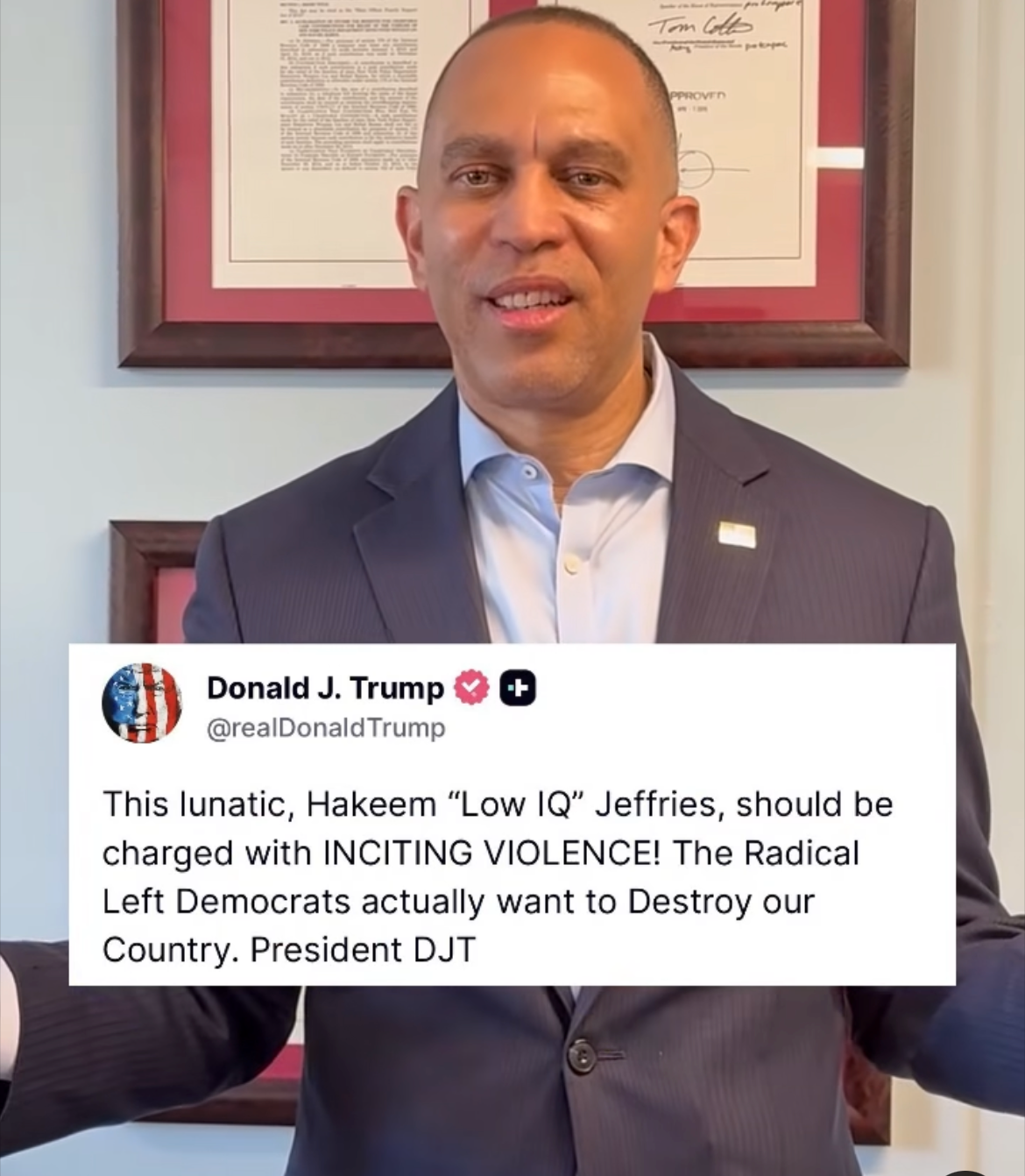
In a recent social media rant, President Donald Trump hurled his favorite insult at House Democratic leader, New York Congressman Hakeem Jeffries, calling Jeffries “low IQ” and a “thug.” Trump’s denigration came as he called for Jeffries to be charged for allegedly inciting the violence at the Washington Correspondents Dinner two weeks ago when a gunman attempted to assassinate Trump.
In conversations held publicly around news desks and in homes, barbershops, and backyard BBQs, one of the questions that invariably surfaces focuses on whether Donald Trump is a racist. Most Black Americans have a ready answer. Mother Jones raised the question earlier this week in an article, and their analysis of his use of the insulting description, “low IQ,” offers credible evidence.
In the last 10 years, Trump used “low IQ” 75 times, and more than half of those times, he applied it to prominent Black Americans. Here’s a look at the numbers.
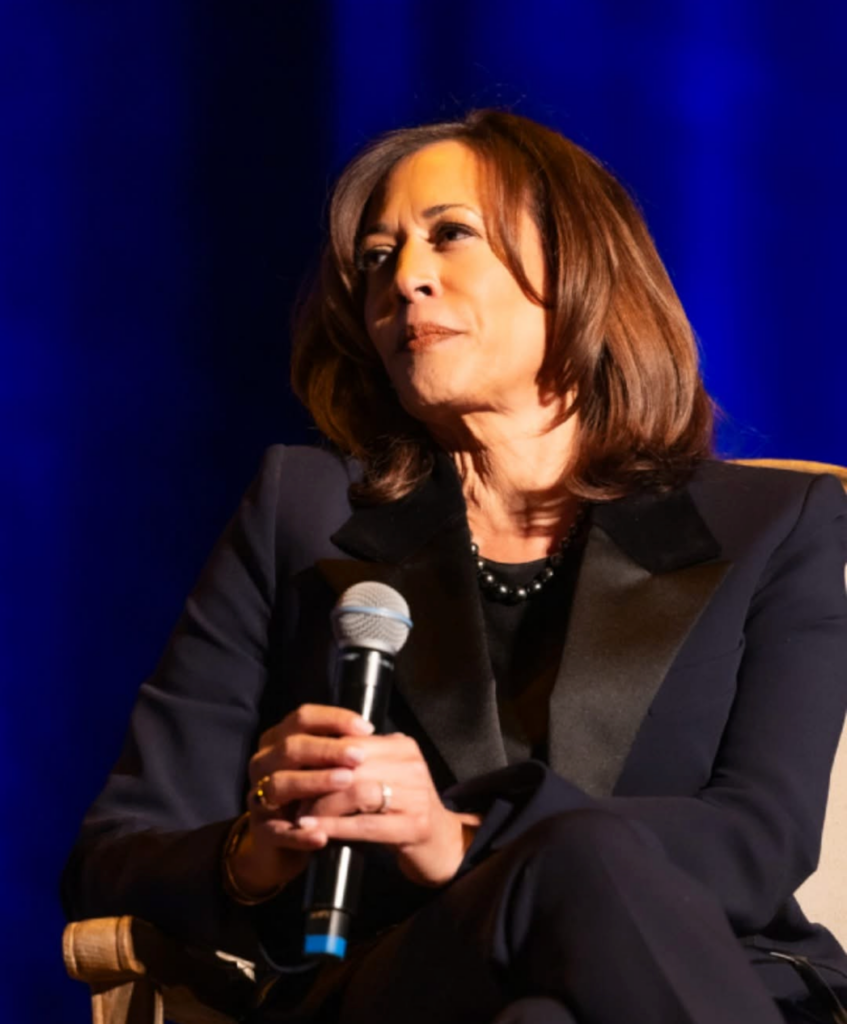
- Vice President Kamala Harris: Targeted 23 times; Trump has called the Vice-President “very low IQ individual”.
- Congresswoman Maxine Waters: Targeted at least 8 times; described as an “extraordinarily low IQ person”.
- Supreme Court Justice Ketanji Brown Jackson: Attacked as “that new, Low IQ person” on the Supreme Court.
- Minority Whip Hakeem Jeffries: Called a “totally low IQ person” and a “thug”.
- Chicago Mayor Brandon Johnson: Targeted 5 times.
- Congresswoman Jasmine Crockett: Referred to as a “low-IQ person” during a Meet the Press appearance.
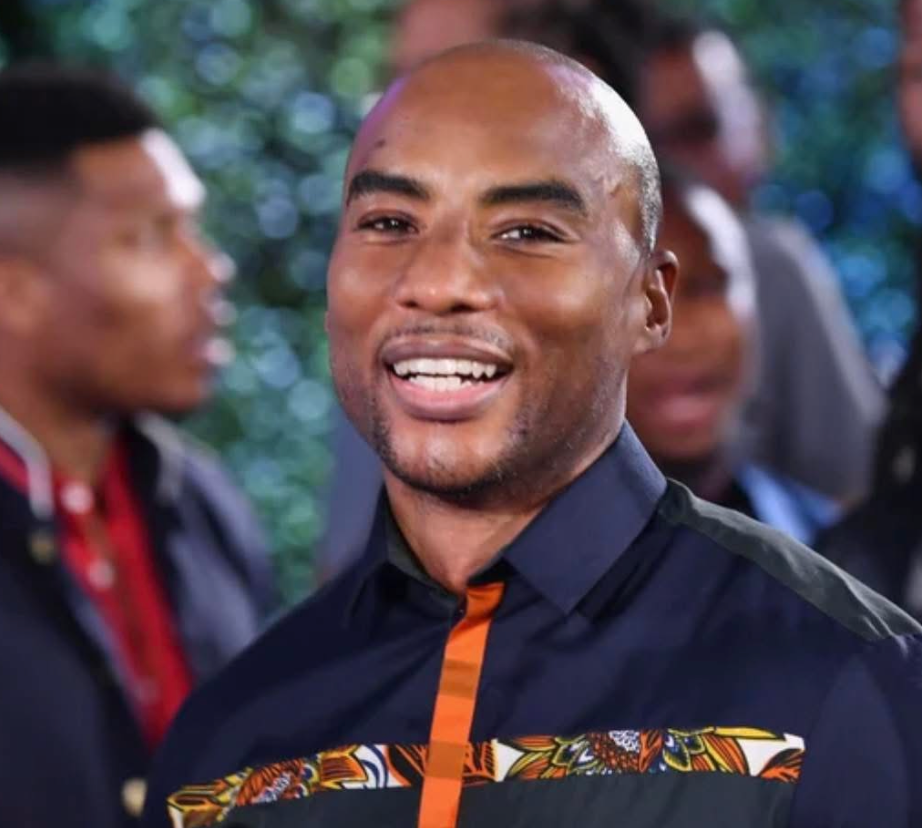
- Radio Host Charlamagne tha God: Labeled a “low IQ individual” in response to his public comments.
- Other Targets: He has also questioned the intelligence of figures like Basketball Superstar LeBron James, Newscaster Don Lemon, and former Trump Supporter Omarosa Manigault Newman.
Jeffries responded with a post of his own, referring to Trump as the “dumbest” president in history.

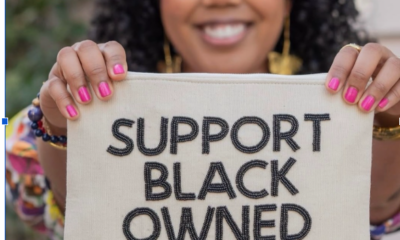





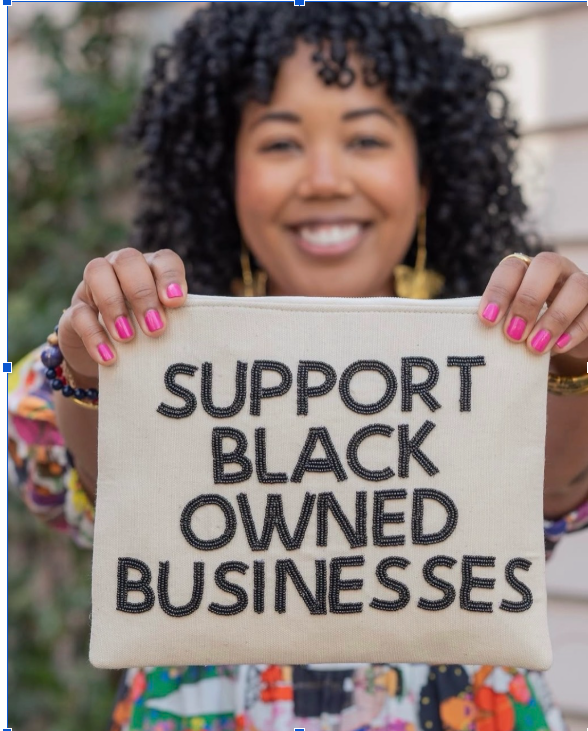
Thousands of Black-owned businesses know August holds a special place on the calendar for building brand awareness and increasing traffic. Since 2004, August has stood tall as Black-owned business month.
In Charleston, the owners of the boutique, Tiny Tassel, posted a discount on social media for customers, writing, “We’re celebrating in the best way possible by helping you save while supporting incredible Black-owned businesses across the Lowcountry!”
The African American Entrepreneurs Association used social media to remind members of its selection as the U.S. Small Business Association’s 2025 Community Partner of the Year. AAEA also repeated its commitment “to empowering entrepreneurs with the resources, education, connections, and advocacy they need to grow and thrive.”
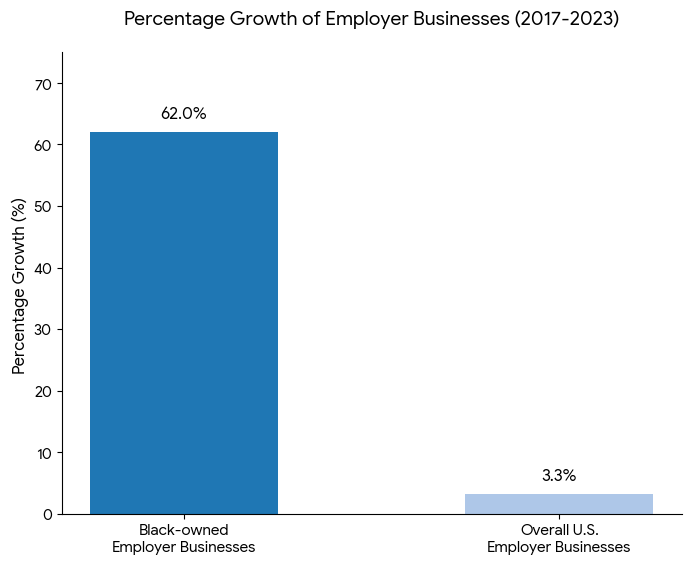
Black-owned employer businesses, which have at least one employee, have moved the needle substantially the past six years to a milestone achievement.
According to the Brookings Institute, the number of Black-owned employer businesses increased 62% in 2023–a dramatic uptick compared to the overall rise of employer-businesses in the U.S., which was reported at 3.3%.
The COVID-19 pandemic dealt Black-owned businesses a crippling blow initially. But in the years since, new Black business creation has sparked a surge that topped pre-pandemic levels. Today, Black-owned businesses claim a little more than 3% of U.S. total businesses–up roughly from 2%.


On the 25th Anniversary of 9-11, America Remembers

Why Most Black Americans Think Nolan Wells’ Death and Two Recent Hangings Are Murder

August is Black-owned Business Month, and There’s Good News


-
 Black History7 years ago
The Idlewild Resort: Once the Largest, Most Successful Resort in the Midwest for Black People
-
 Black History8 years ago
Meet Sarah Boone, the Woman Who Patented the Ironing Board
-

 Black History6 years ago
Charles Baker: African American Inventor of Friction Heat
-
 Black History7 years ago
Auburn Avenue: The Richest “Negro Street in the World”
-
 Black History7 years ago
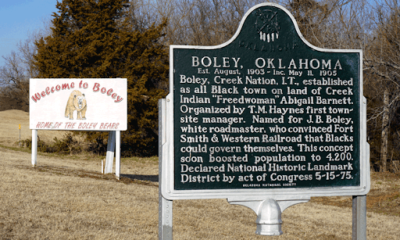
Boley, Oklahoma: One of the Last All-Black Towns Still Standing
-
 Black History8 years ago
Meet Elijah McCoy: The father of Lubrication, the Real McCoy
-

 Black History11 years ago
Ursula Burns, From Intern to CEO
-
 Black History6 years ago
Five Facts to Know About the Civil Rights Act of 1964 on its Anniversary