Connect with us

Featured

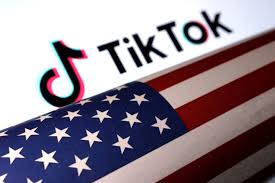
What’s Next for TikTok Now That Trump is in Office

Published

on

The future of TikTok in the United States has been uncertain for months now, and the fate of the popular app is still up in the air as a new administration takes office with President Trump signing an executive order that delays action on the ban for 75 days. More than 170 million American users are riding an emotional rollercoaster, especially content creators who have parlayed TikTok into a lucrative revenue stream.

Charli D’Amelio, considered by many as the TikTok queen for turning the Chinese platform into an income juggernaut, is following the developments closely.

“Social media comes and goes,” the 19-year-old said. “There’s new apps, there’s new people, there’s exciting new trends.”

But D’Amelio, who rose to fame with her dance videos which generate a staggering $247,000 per video, offers a stance that is far more accepting of the uncertainty than many other content creators.

TikTok timeline

Congress passed bipartisan legislation last spring, requiring TikTok to sell the app to a U.S. owner by January 19, 2025, or face a ban. Days before January 19, the Supreme Court upheld the ban. But then President-elect indicated he would grant ByteDance, TikTok’s owner, a reprieve. 

As the new president, Trump celebrated his return to Washington, D.C. on Monday with a slate of parties and rallies, and he invited the CEO of TikTok to attend the inauguration. The 47th president also vowed to “save” the app.

The idea of Trump granting a reprieve is an about-face from July 2020 when he was president the first time and considered banning TikTok as retaliation for China’s alleged mishandling of the COVID-10 pandemic. In 2019 the Pentagon had recommended that all U.S. military personnel delete TikTok from all phones. FBI Director Christopher Wray raised national security concerns about the Chinese app.

Only hours into his second term, Trump’s action adds another chapter to the ongoing saga, granting users an opportunity to continue to use TikTok but without a clear outcome.

Featured

On the 25th Anniversary of 9-11, America Remembers

Published

on

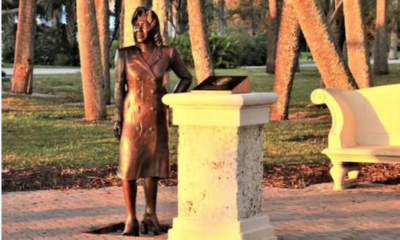
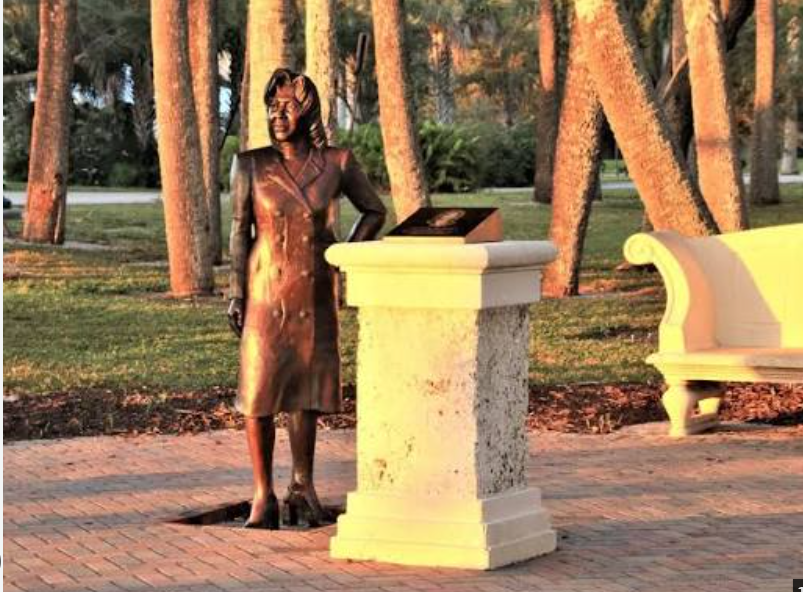
All around America, there are tributes to the victims of 9-11. A statue of Fort Pierce, Florida native, CeeCee Lyles, stands on the river walk. Nine years ago, a family member joined TheVillageCelebration’s founder, Vickie Newton, to share the family’s profound loss and thoughts about Ms. Lyles’ final moments as a flight attendant on board the plane that crashed in Shanksville, Pennsylvania, after passengers fought the hijackers to prevent the plane from reaching Washington, D.C. 


Continue Reading

Featured

Why Most Black Americans Think Nolan Wells’ Death and Two Recent Hangings Are Murder

Published

on

For Black Americans, the summer’s most prominent news headlines seem to revisit an era defined by violence and chronicled in history books. 

Yet, in May, a 16 year-old teenager in Charlotte, North Carolina, was found hanging from a tree near a churchyard. Juliana Nzita’s family disagrees with the medical examiner’s ruling that the teen died by suicide.

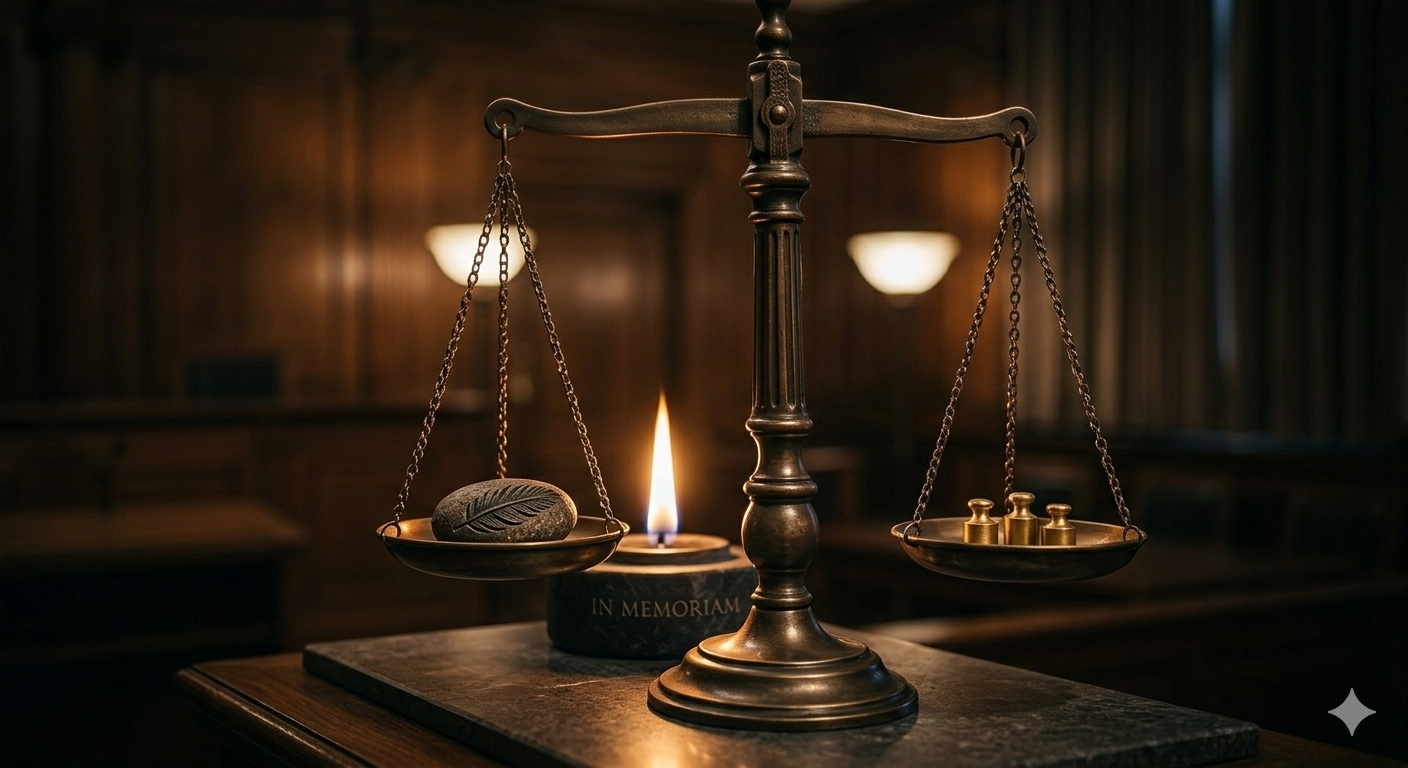
Mississippi college student, Nolan Wells, went missing after he spent July 4 boating on Horn Island with a group of white friends–only to be found two days later face down in the water. His family hired famed civil rights attorney Ben Crump, and a grand jury has been convened.

On August 3, police found the body of 29-year-old Tasia Fortune hanging from a tree near an abandoned house; she was found hanging so high up in the tree rescuers used a fire department ladder to reach her body.

News outlets, social media, and many Americans continue to follow the developments, and many Black Americans are crying foul, seeing a familiar and disturbing historical pattern.

“I believe these are murders, and they are a form of messaging,” said Ray Winbush, who is a research professor and leads the Institute for Urban Research at Morgan State University. 

New book traces history of lynchings

Winbush works with Stacy Patton, the author of the book, “Strung Up: How White America Learned to Lynch Black Children,” which will be released in October 2026.

Publishers Weekly gave Patton’s book a starred review, which she explained on her Substack “is one of the biggest prepublication endorsements a book can get.”

In its review, Publishers Weekly described the book as, “gripping,” and quoted Patton, writing the “Black child has always been central to America’s racial order… as a target.” 

Winbush expanded on Patton’s study.

“The killing of Black people, in general, and Black children, specifically, is a ritual for White people that dates back centuries,” he added.

Continue Reading

Featured

August is Black-owned Business Month, and There’s Good News 

Published

on

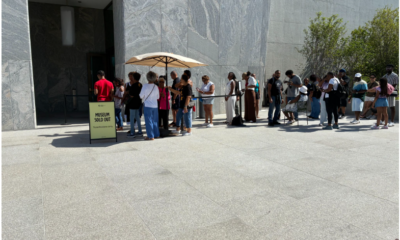
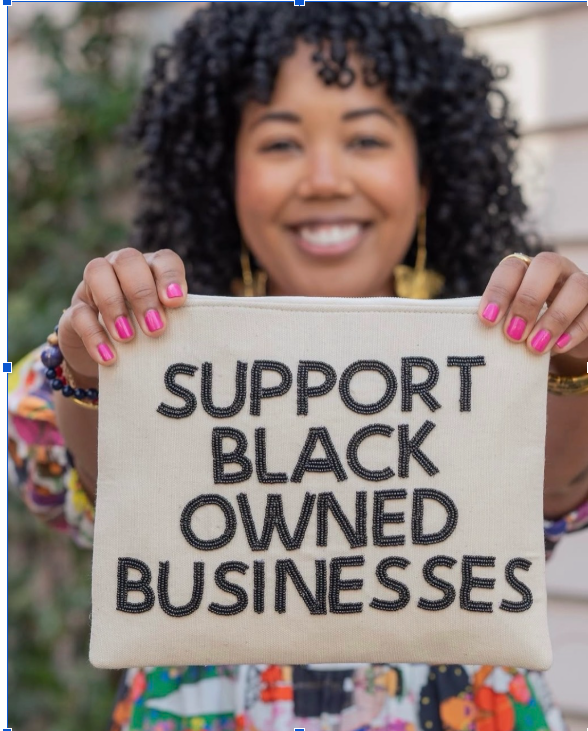
Thousands of Black-owned businesses know August holds a special place on the calendar for building brand awareness and increasing traffic. Since 2004, August has stood tall as Black-owned business month.

In Charleston, the owners of the boutique, Tiny Tassel, posted a discount on social media for customers, writing, “We’re celebrating in the best way possible by helping you save while supporting incredible Black-owned businesses across the Lowcountry!”

The African American Entrepreneurs Association used social media to remind members of its selection as the U.S. Small Business Association’s 2025 Community Partner of the Year. AAEA also repeated its commitment “to empowering entrepreneurs with the resources, education, connections, and advocacy they need to grow and thrive.”

Black-owned employer businesses, which have at least one employee, have moved the needle substantially the past six years to a milestone achievement.  

According to the Brookings Institute, the number of Black-owned employer businesses increased 62% in 2023–a dramatic uptick compared to the overall rise of employer-businesses in the U.S., which was reported at 3.3%.
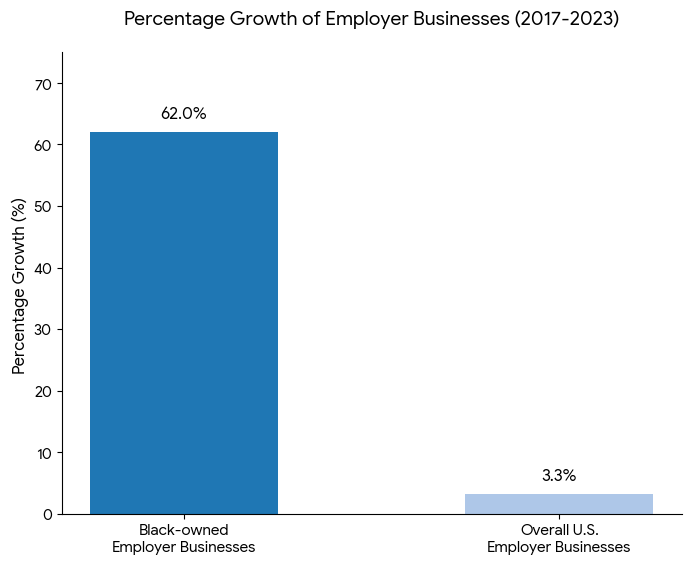
The COVID-19 pandemic dealt Black-owned businesses a crippling blow initially. But in the years since, new Black business creation has sparked a surge that topped pre-pandemic levels. Today, Black-owned businesses claim a little more than 3% of U.S. total businesses–up roughly from 2%.

Continue Reading

Trending

Copyright © 2026 Love Black History, powered by WordPress.