Connect with us

Featured

With RFK, Jr.’s Confirmation Almost Certain, There Is Growing Concern for the Health of Black Americans

Published

on

The third week of Donald Trump’s administration delivered more unprecedented racism in modern politics and more pushback.

Robert F. Kennedy, Jr., who Trump has nominated to lead the Department of Health and Human Services,  moved one step closer to confirmation last, but without support from Senator Angela Alsobrooks (D-MD). 

During RFK’s confirmation hearing, Alsobrooks – one of two Black female U.S. Senators – questioned him about comments he’s made about African Americans’ immune systems. 

Kennedy has said, “We should not be giving Black people the same vaccine schedule that’s given to whites because their immune system is better than ours.”

Alsobrooks asked him to explain his suggestion, adding, “So what different vaccine schedule would you say I should have received? With all due respect, that is so dangerous.”

According to a Mayo study, African Americans do present a higher antibody response after MMR (Measles, Mumps and Rubella) vaccination compared to white people. But the author of the study says that does not mean there needs to be a different vaccination schedule because race, sex and other factors often generate different responses.  

The tense exchange made headlines and directed a laser focus on Kennedy’s well-known controversial position as an anti-vaccine leader. 

Federal health workers targeted

There  is more trouble for Black federal health workers after NBC News reported that a website known as “DEI Watch List” published the photos, names and public information of some workers in health agencies, describing them as “targets.”

Workers listed on the website had supported DEI initiatives, donated to Democrats and the majority of them were African American.

Dr. Benjamin Georges, the executive director of the American Public Health Association said, “This is a scare tactic to try to intimidate people who are trying to do their work and do it admirably. It’s clear racism.”

Georges has also described Kennedy as “unqualified” to be the nation’s chief health officer.

If confirmed, Kennedy would oversee a $1.7 trillion annual budget and 13 agencies, including the Centers for Disease Control and the National Institutes of Health.

Continue Reading

Featured

On the 25th Anniversary of 9-11, America Remembers

Published

on

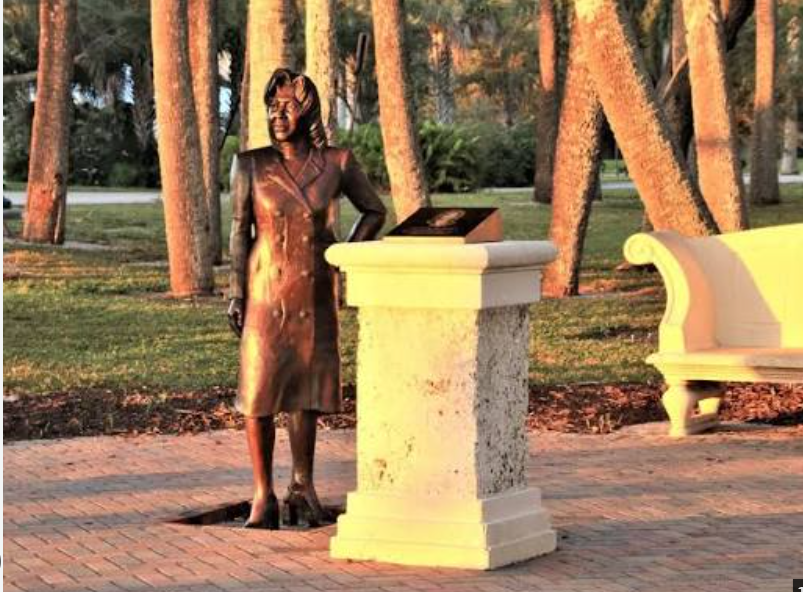
All around America, there are tributes to the victims of 9-11. A statue of Fort Pierce, Florida native, CeeCee Lyles, stands on the river walk. Nine years ago, a family member joined TheVillageCelebration’s founder, Vickie Newton, to share the family’s profound loss and thoughts about Ms. Lyles’ final moments as a flight attendant on board the plane that crashed in Shanksville, Pennsylvania, after passengers fought the hijackers to prevent the plane from reaching Washington, D.C. 


Continue Reading

Featured

Why Most Black Americans Think Nolan Wells’ Death and Two Recent Hangings Are Murder

Published

on

For Black Americans, the summer’s most prominent news headlines seem to revisit an era defined by violence and chronicled in history books. 

Yet, in May, a 16 year-old teenager in Charlotte, North Carolina, was found hanging from a tree near a churchyard. Juliana Nzita’s family disagrees with the medical examiner’s ruling that the teen died by suicide.

Mississippi college student, Nolan Wells, went missing after he spent July 4 boating on Horn Island with a group of white friends–only to be found two days later face down in the water. His family hired famed civil rights attorney Ben Crump, and a grand jury has been convened.

On August 3, police found the body of 29-year-old Tasia Fortune hanging from a tree near an abandoned house; she was found hanging so high up in the tree rescuers used a fire department ladder to reach her body.

News outlets, social media, and many Americans continue to follow the developments, and many Black Americans are crying foul, seeing a familiar and disturbing historical pattern.

“I believe these are murders, and they are a form of messaging,” said Ray Winbush, who is a research professor and leads the Institute for Urban Research at Morgan State University. 

New book traces history of lynchings

Winbush works with Stacy Patton, the author of the book, “Strung Up: How White America Learned to Lynch Black Children,” which will be released in October 2026.

Publishers Weekly gave Patton’s book a starred review, which she explained on her Substack “is one of the biggest prepublication endorsements a book can get.”

In its review, Publishers Weekly described the book as, “gripping,” and quoted Patton, writing the “Black child has always been central to America’s racial order… as a target.” 

Winbush expanded on Patton’s study.

“The killing of Black people, in general, and Black children, specifically, is a ritual for White people that dates back centuries,” he added.

Continue Reading

Featured

August is Black-owned Business Month, and There’s Good News 

Published

on

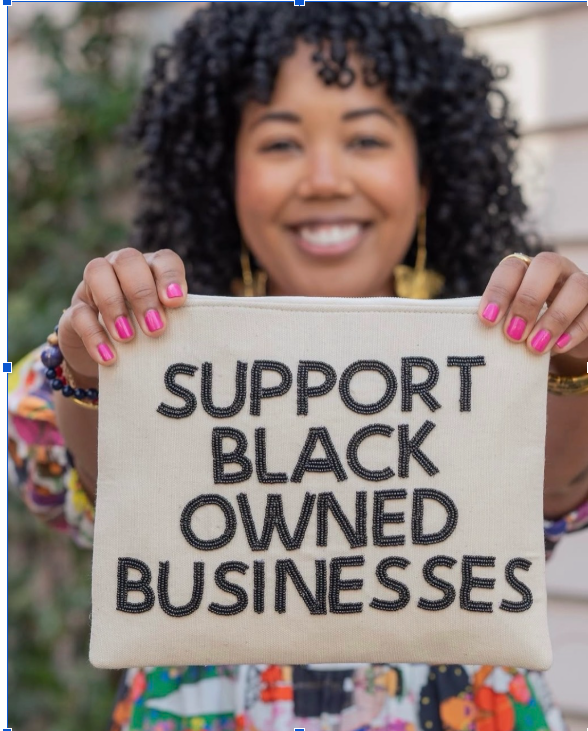
Thousands of Black-owned businesses know August holds a special place on the calendar for building brand awareness and increasing traffic. Since 2004, August has stood tall as Black-owned business month.

In Charleston, the owners of the boutique, Tiny Tassel, posted a discount on social media for customers, writing, “We’re celebrating in the best way possible by helping you save while supporting incredible Black-owned businesses across the Lowcountry!”

The African American Entrepreneurs Association used social media to remind members of its selection as the U.S. Small Business Association’s 2025 Community Partner of the Year. AAEA also repeated its commitment “to empowering entrepreneurs with the resources, education, connections, and advocacy they need to grow and thrive.”

Black-owned employer businesses, which have at least one employee, have moved the needle substantially the past six years to a milestone achievement.  

According to the Brookings Institute, the number of Black-owned employer businesses increased 62% in 2023–a dramatic uptick compared to the overall rise of employer-businesses in the U.S., which was reported at 3.3%.
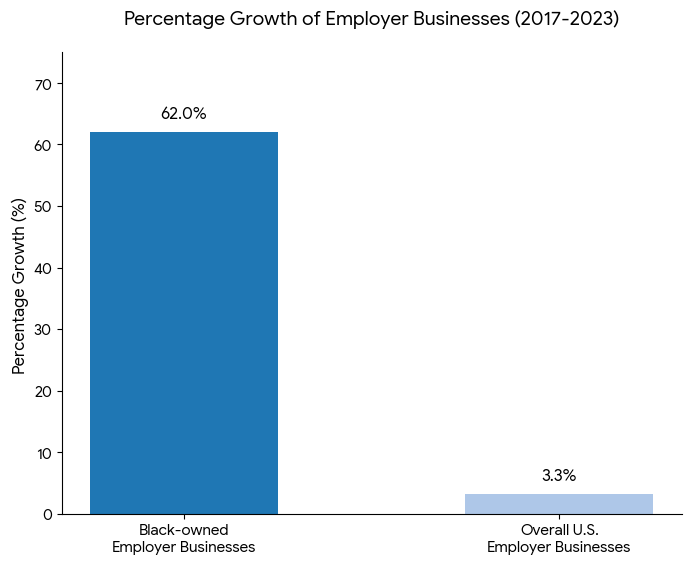
The COVID-19 pandemic dealt Black-owned businesses a crippling blow initially. But in the years since, new Black business creation has sparked a surge that topped pre-pandemic levels. Today, Black-owned businesses claim a little more than 3% of U.S. total businesses–up roughly from 2%.

Continue Reading

Trending

Copyright © 2026 Love Black History, powered by WordPress.