
Featured
Why Most Black Americans Think Nolan Wells’ Death and Two Recent Hangings Are Murder

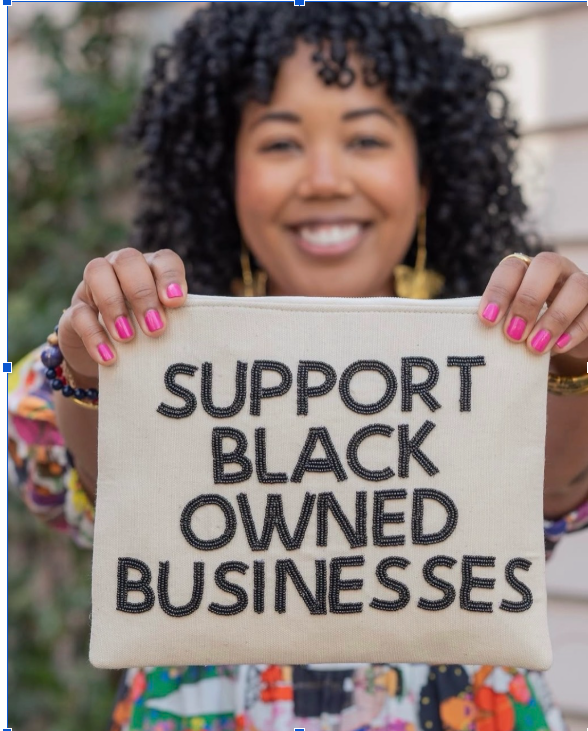
Thousands of Black-owned businesses know August holds a special place on the calendar for building brand awareness and increasing traffic. Since 2004, August has stood tall as Black-owned business month.
In Charleston, the owners of the boutique, Tiny Tassel, posted a discount on social media for customers, writing, “We’re celebrating in the best way possible by helping you save while supporting incredible Black-owned businesses across the Lowcountry!”
The African American Entrepreneurs Association used social media to remind members of its selection as the U.S. Small Business Association’s 2025 Community Partner of the Year. AAEA also repeated its commitment “to empowering entrepreneurs with the resources, education, connections, and advocacy they need to grow and thrive.”
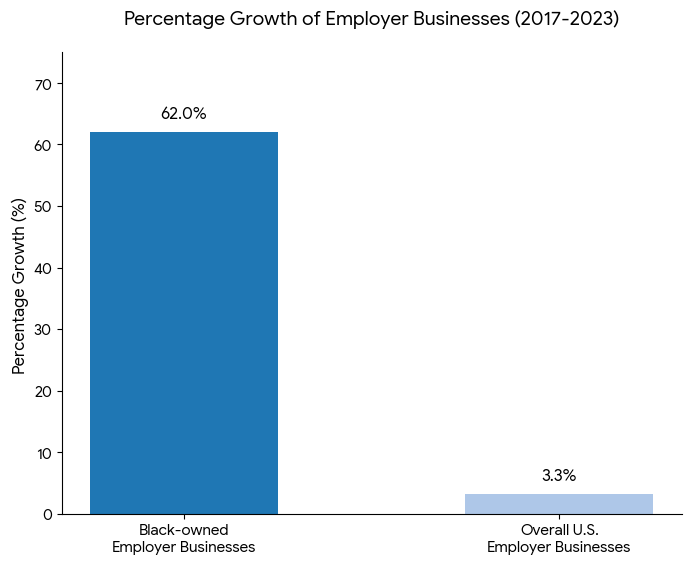
Black-owned employer businesses, which have at least one employee, have moved the needle substantially the past six years to a milestone achievement.
According to the Brookings Institute, the number of Black-owned employer businesses increased 62% in 2023–a dramatic uptick compared to the overall rise of employer-businesses in the U.S., which was reported at 3.3%.
The COVID-19 pandemic dealt Black-owned businesses a crippling blow initially. But in the years since, new Black business creation has sparked a surge that topped pre-pandemic levels. Today, Black-owned businesses claim a little more than 3% of U.S. total businesses–up roughly from 2%.
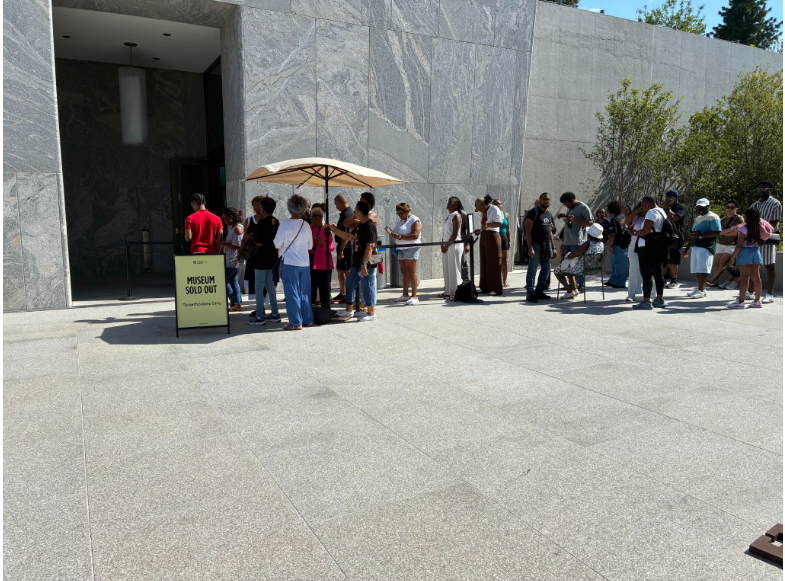
Charlotte Winstead sat outside the Obama Presidential Center with a smile on her face. She and a group of her closest friends had flown hundreds of miles to make her birthday wish come true.
“Ever since the Center opened on Juneteenth, and I watched the President on TV talking about it, I have wanted to visit,” Winstead said. “And I can’t wait to tour the museum and the grounds.”
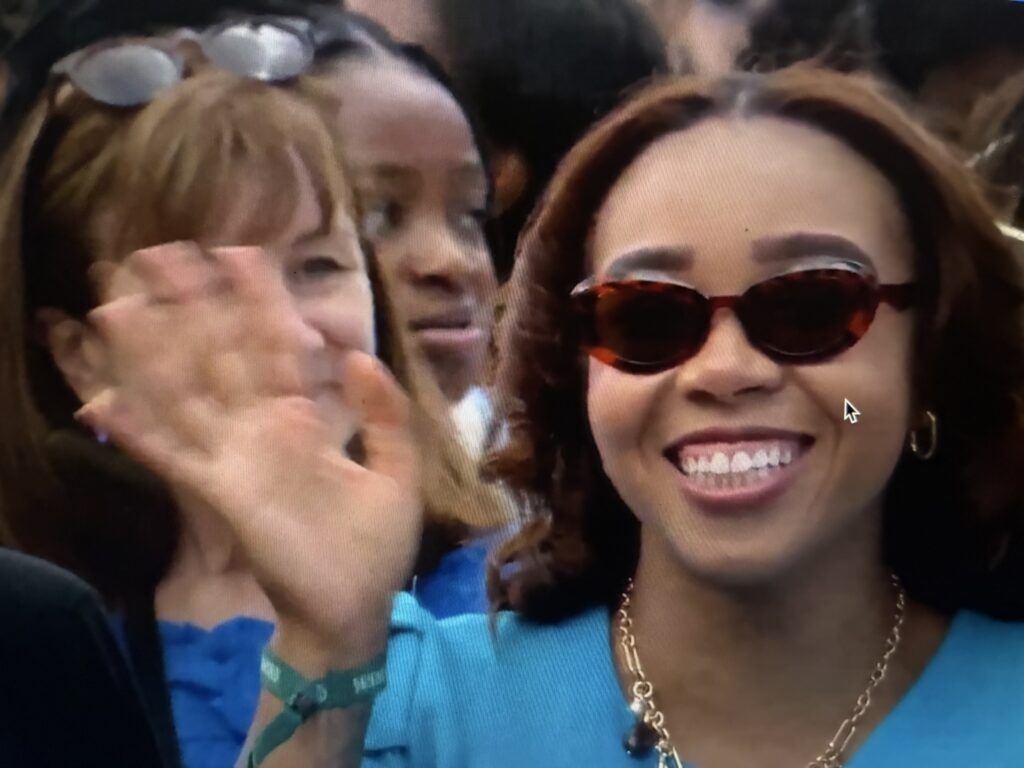
Like the dozens of others gathered on the John Lewis Plaza that Saturday morning, Winstead waited patiently. Some lined up to take a photo in front of the statue of President Obama and the former First Lady. Others walked into the Obama Presidential Center Branch of the Chicago Public Library.
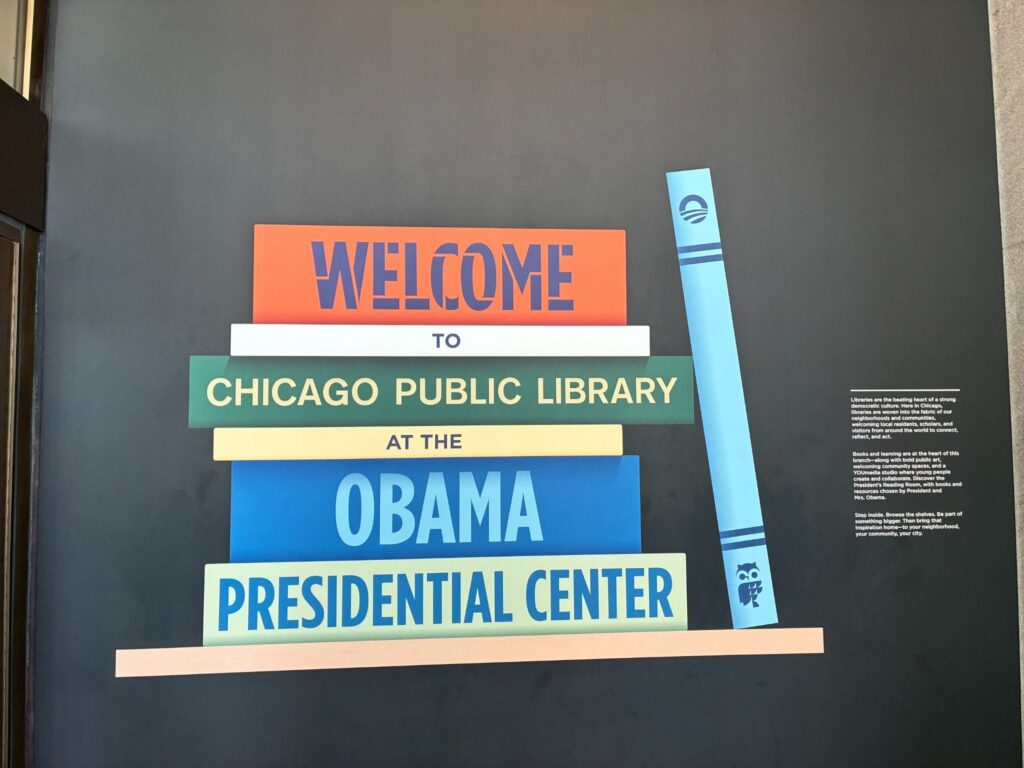
Winstead wore a crown and maintained a queen’s posture, smiling and waving to others as the Plaza filled up. Staff ushered museum goers with tickets into the main building while visitors without one of the highly-sought after tickets toured the floors available to the public, the manicured grounds, and the playground.
Keily Martin and her family talked animatedly about the grounds and their plans to return for a picnic.
Martin admitted, “We saw two couples with picnic baskets lounging on the grass and said, ‘That’s us the next time.’”
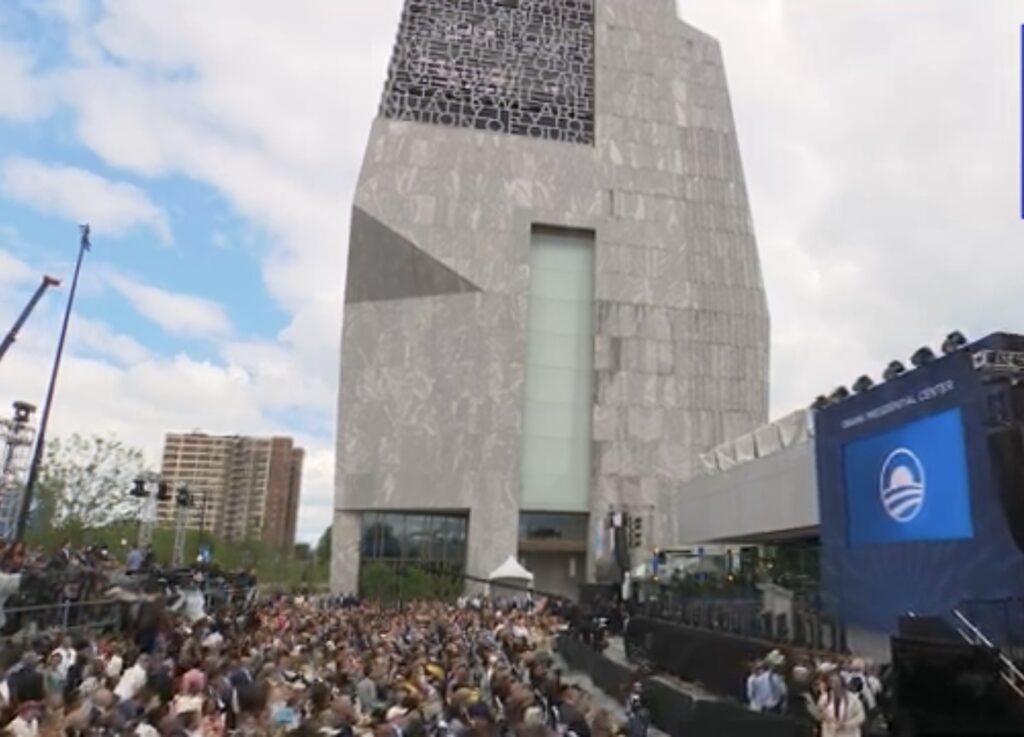
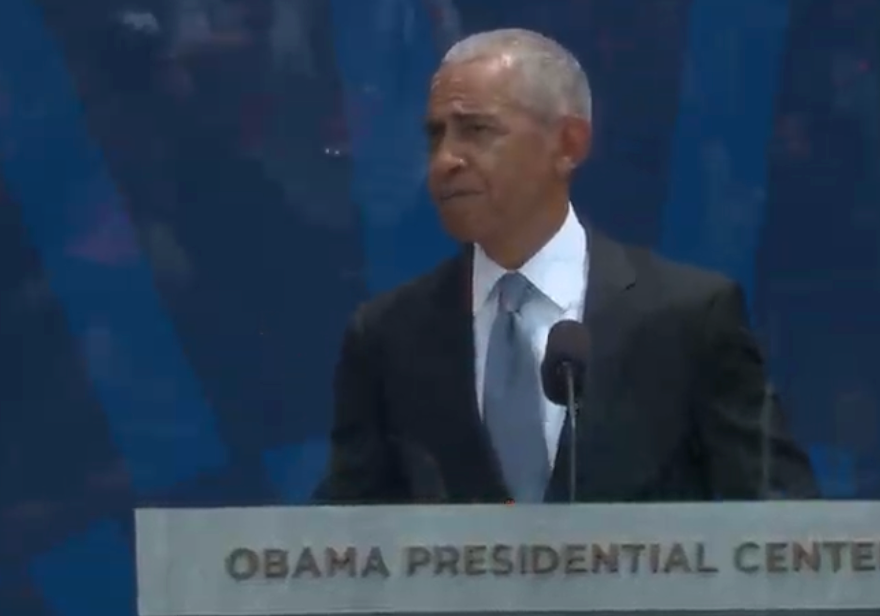
The Obama Presidential Center opened on Juneteenth to rave reviews after 11 years of development and construction.
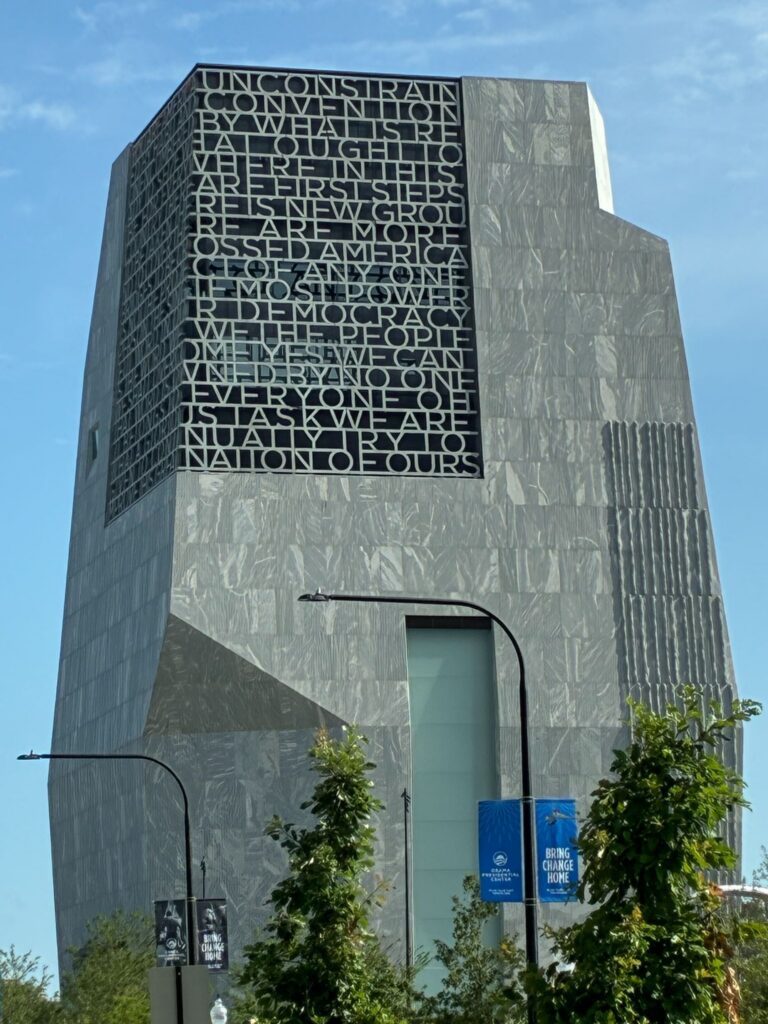
On opening day, Obama stated, “I hope this center will serve as an affirmation of just how special, how precious our democracy truly is and remind us what we can achieve when we embrace our shared responsibilities as citizens.”
Tickets to tour the museum have sold out faster than front rock seats at a rock concert. Reportedly the museum tours are booked
Teenage members of the NAACP’s program, ACT-SO, moved excitedly into the museum. They were in Chicago for the civil rights organization’s annual convention.
Adelyn Jones and her friends had snapped pictures as they waited and shared them with family friends.
Jones said, “I can’t wait for my grandmother to see me here. She is a big fan of President and Mrs. Obama.”
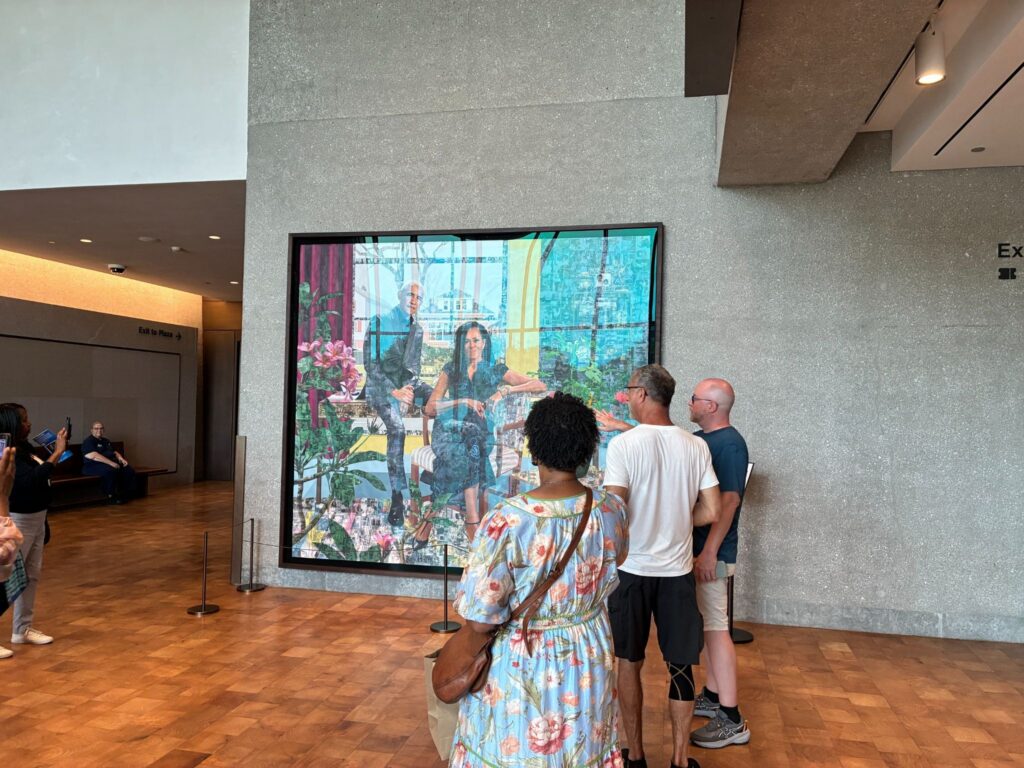
Outside the gift shop, Amy Cash clutched two bags filled with books, a few t-shirts, and a coffee mug.
“The coffee mug is mine,” Cash explained. “My mornings just got better. Regardless of what the news is, I’ll have my mug to remind me we are still Americans–and a democracy.”
Near the Fannie Lou Hamer Walkway, Winstead and her friends posed for one more picture. She still wore the plastic crown her loved ones had given her. She recalled Obama’s remarks from the museum’s opening–”no kings” in America, but she had to confess: She’d felt like royalty at a presidential center dedicated to preserving and encouraging democracy.
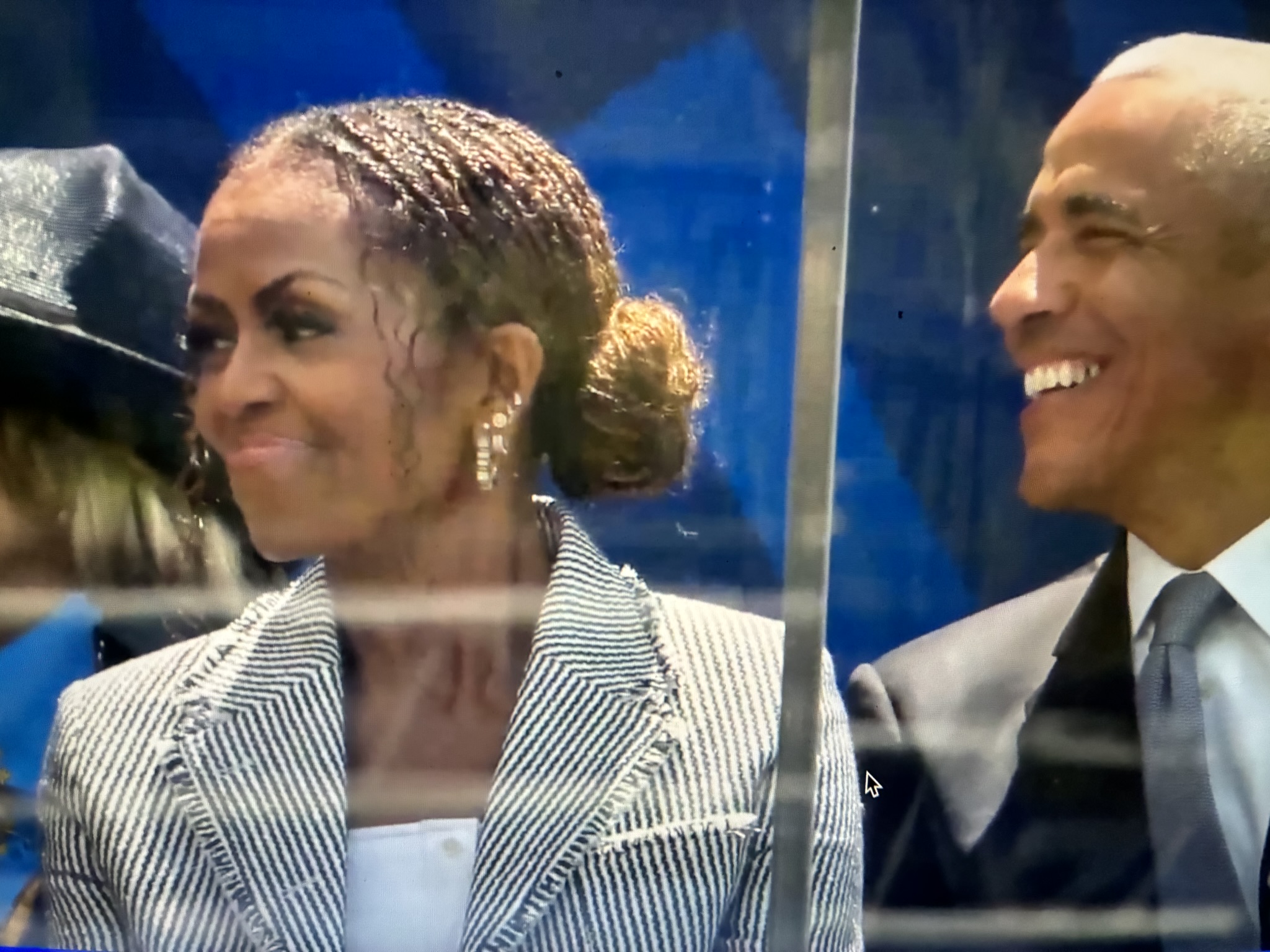
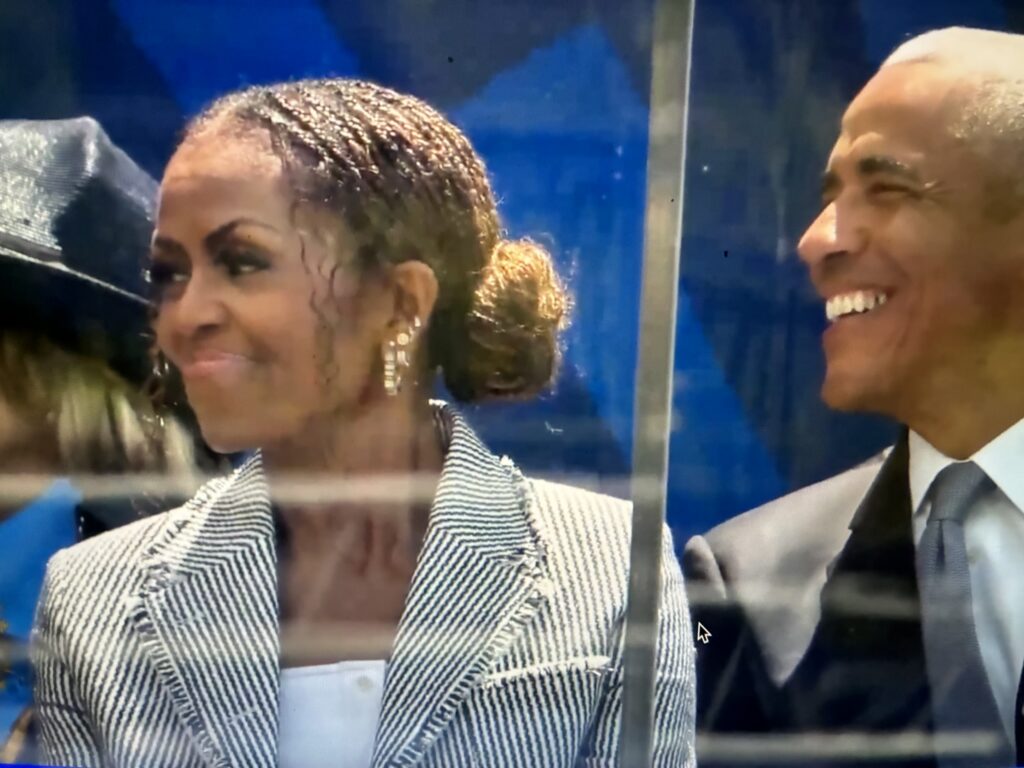
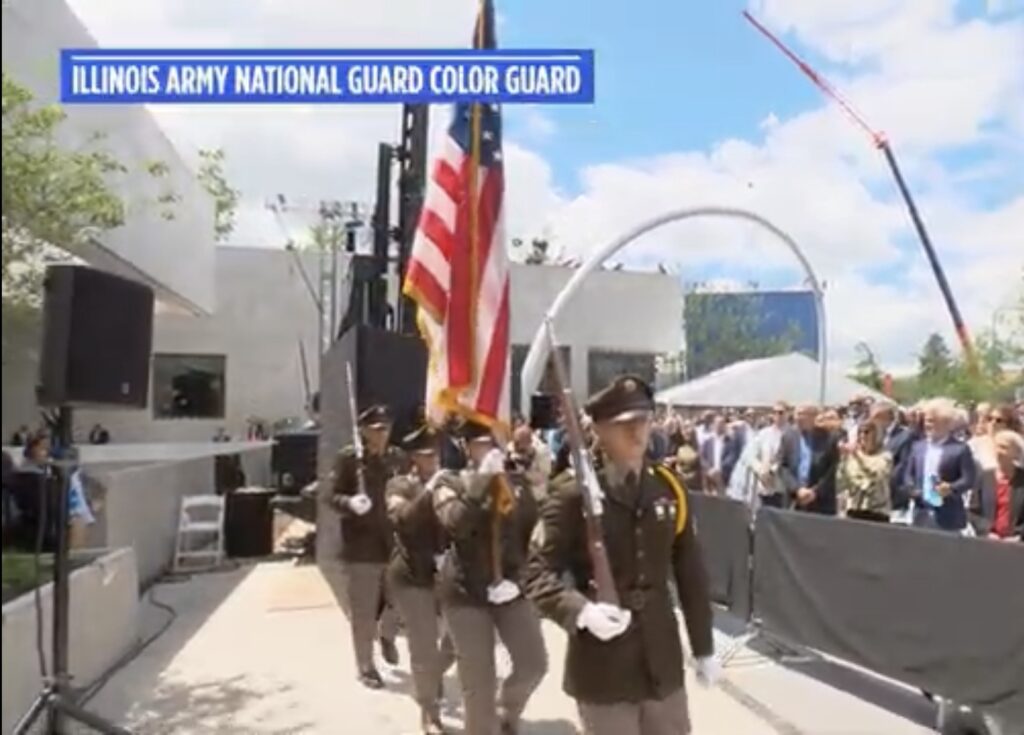
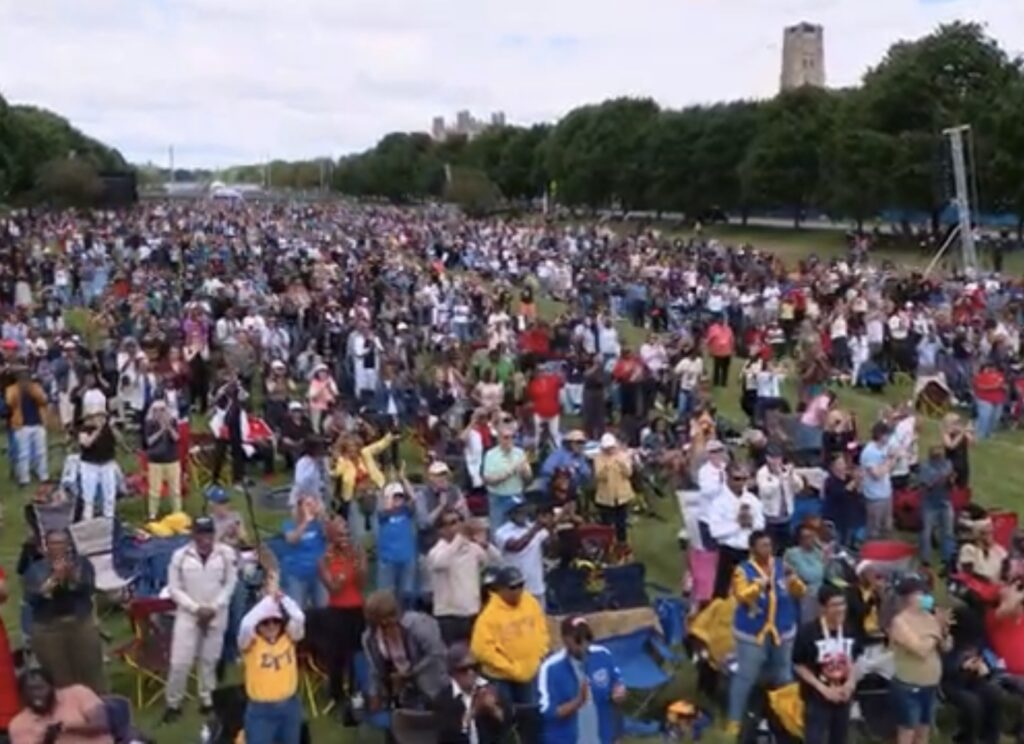
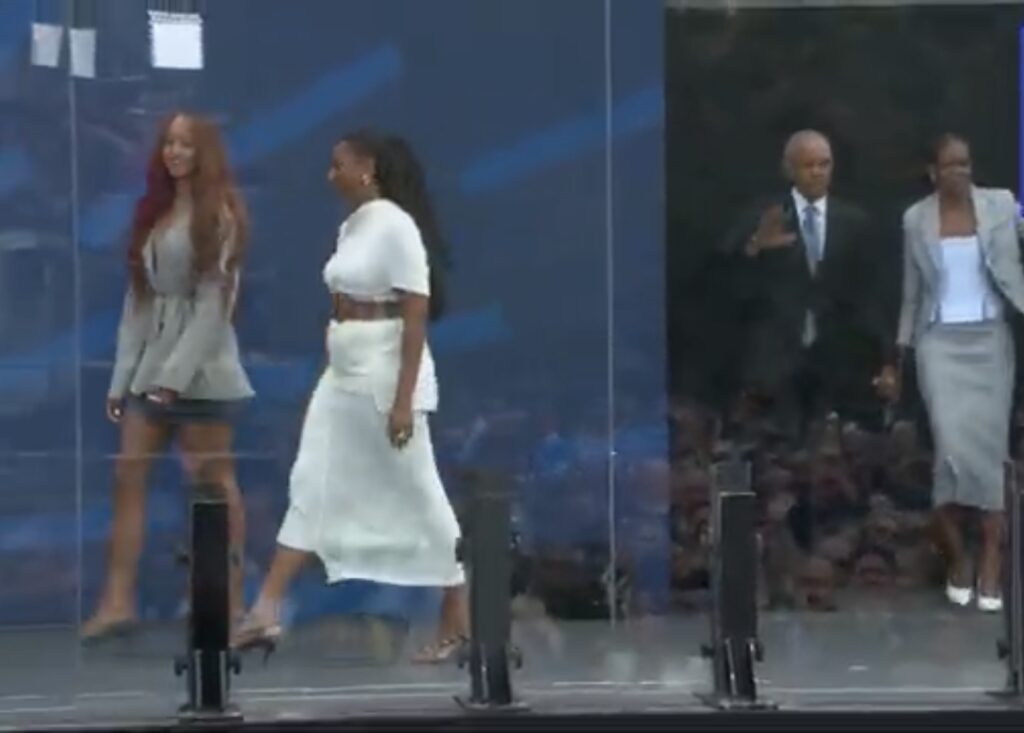
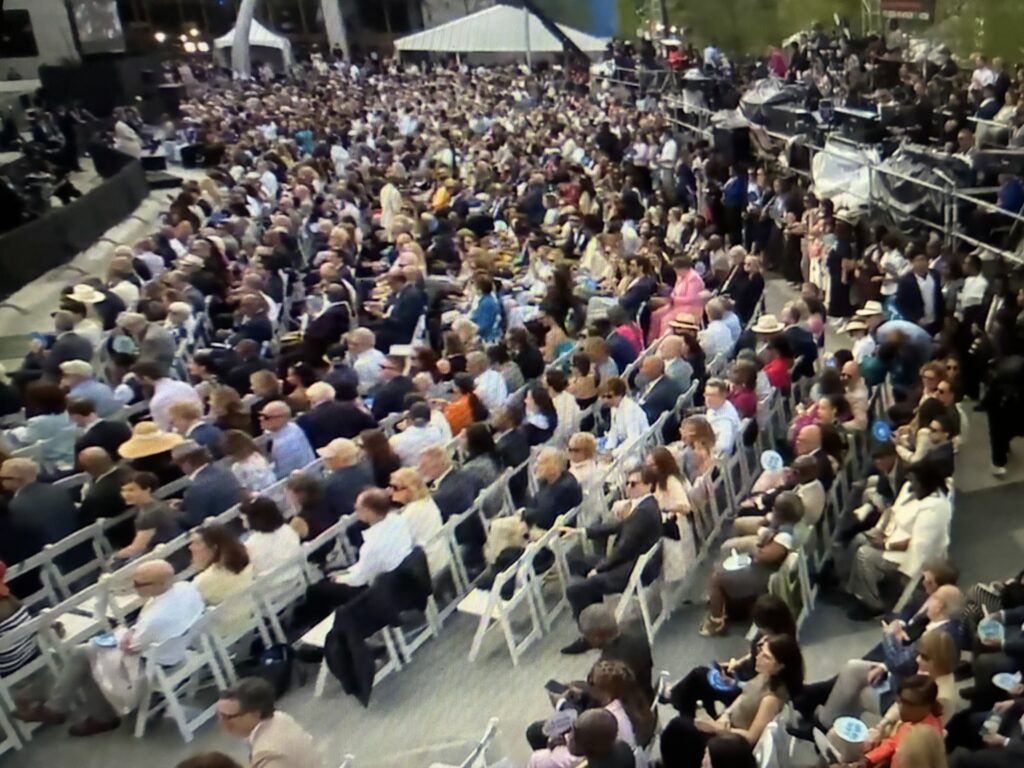
Thousands of Americans gathered on the grounds of Chicago’s Jackson Park, home of the long-awaited Obama Presidential Center, to celebrate the grand opening of the museum honoring the legacy of the nation’s first Black president.
Marty Nesbitt, Chairman of the Obama Foundation Board of Trustees, said, “This Center is more than a building, it is a promise. A promise that leadership matters, that democracy depends on participation.”
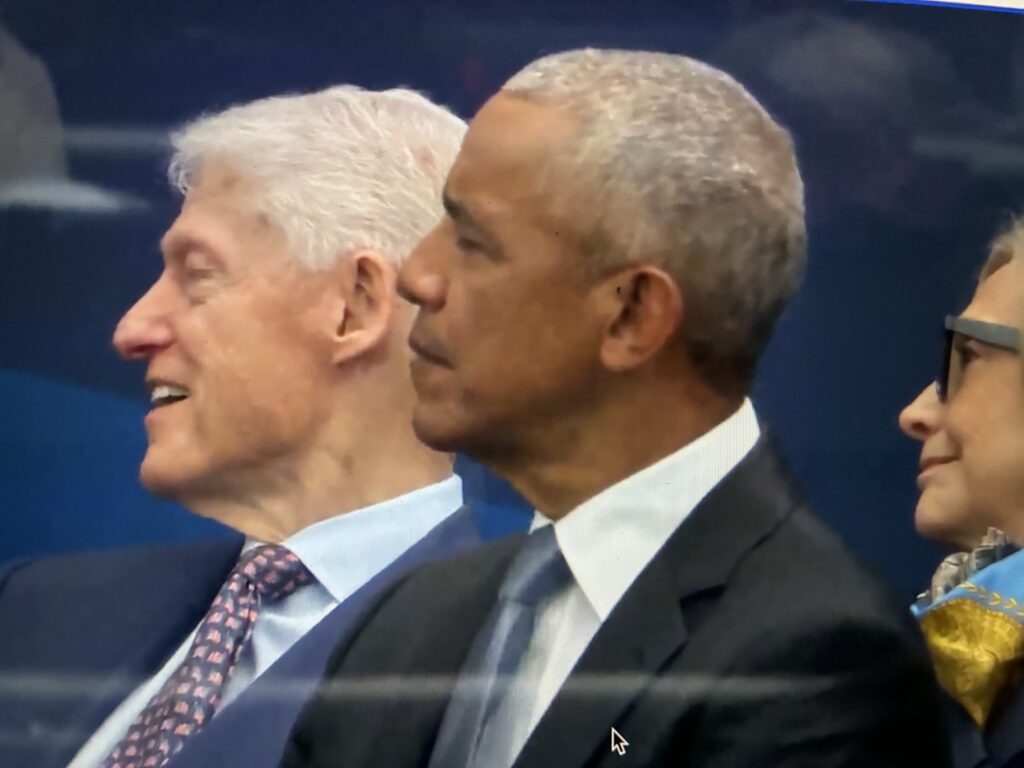
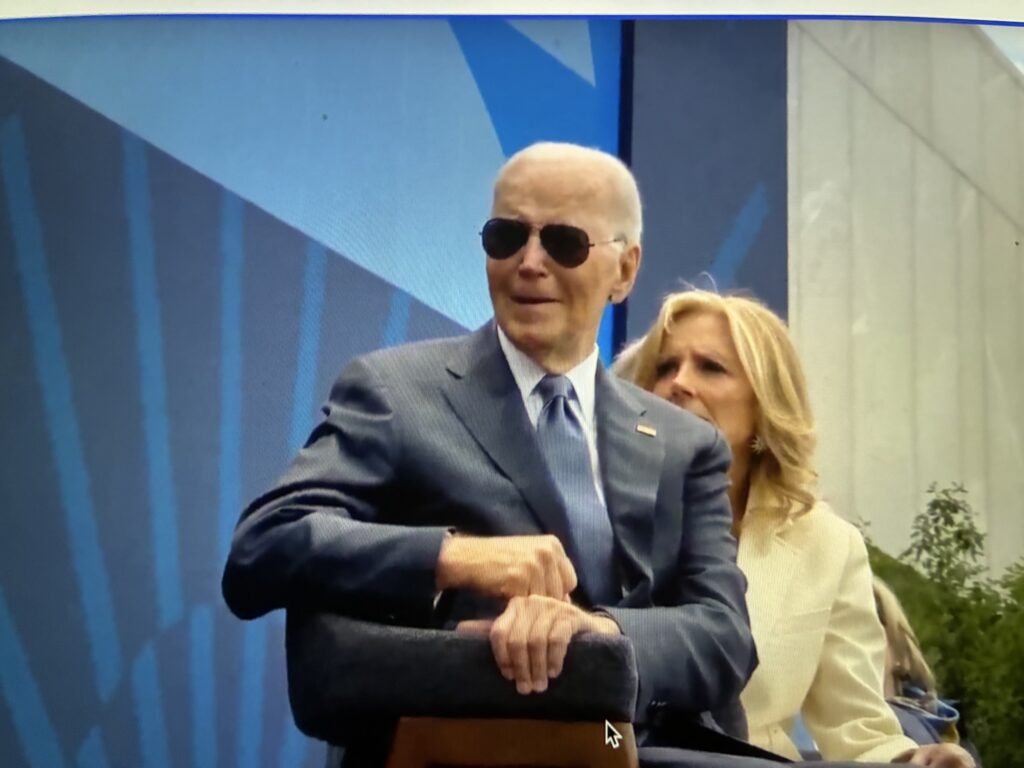
In a show of presidential support, former presidents Bill Clinton, George Bush, and Joe Biden and their wives attended the opening day festivities. Former heads of state Justin Trudeau of Canada and Angela Merkel of Germany also joined the Obamas.
The former president recounted the day he arrived in Chicago. He was 23 years-old, and he had been hired by a group of churches on the Southside of Chicago to lead some organizing efforts.
“I was possessed with this abiding faith that if we could give people more of a say in the forces that guided their lives … we could build an America where everyone counts, everyone has a fair shot even a kid with a weird name. I found what I was looking for.”
He added, “For me, this Center could not be anyplace else. It is an expression of thanks.”
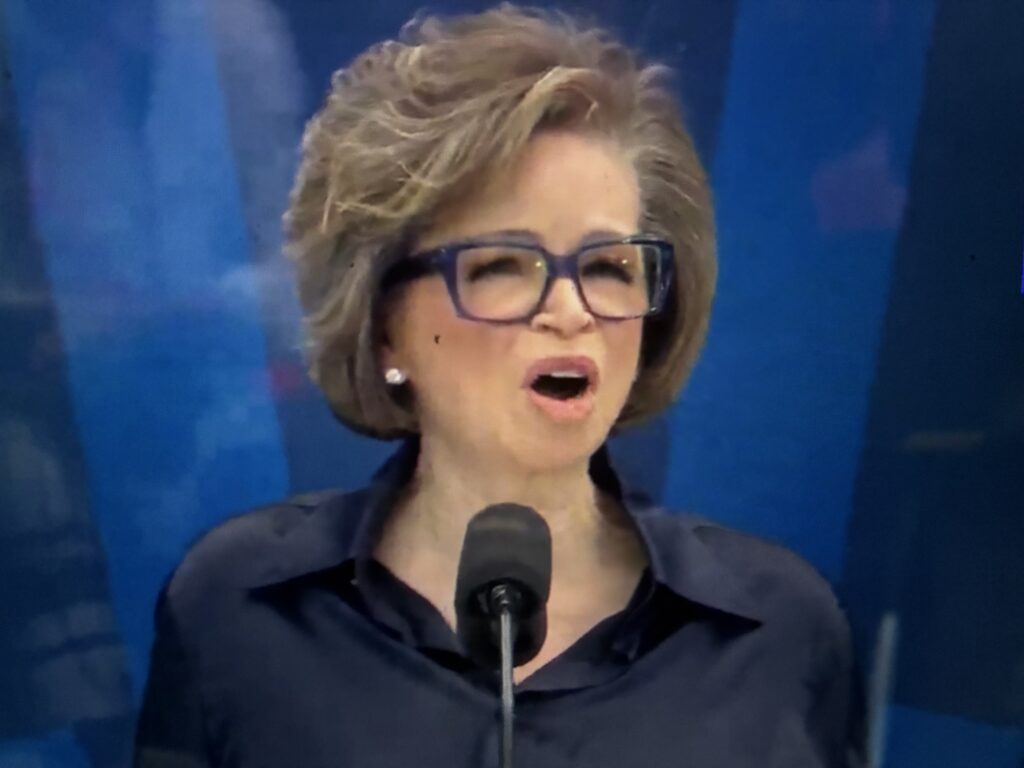
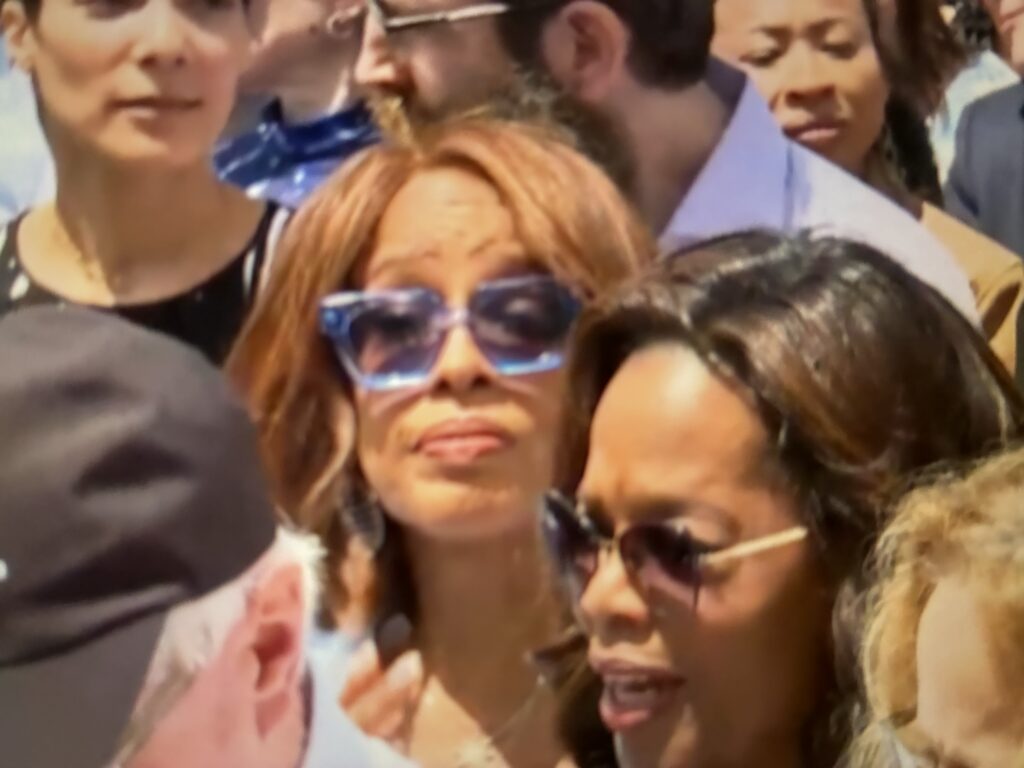
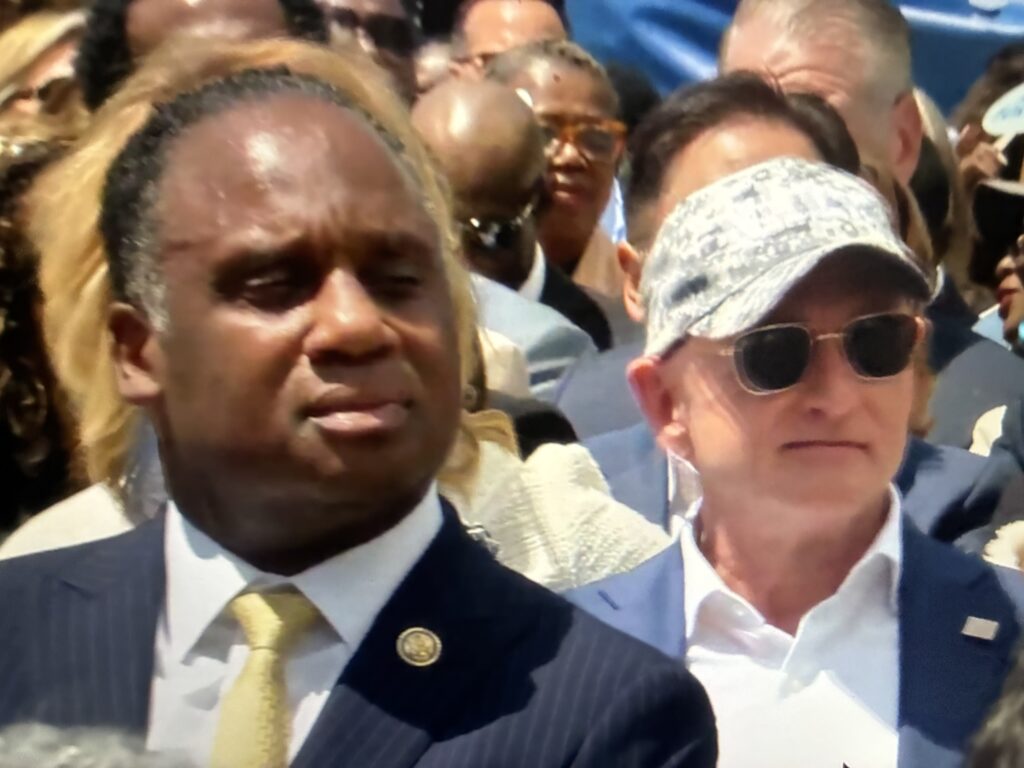
Famous politicians, leaders and celebrities sat in the VIP section, and on the lawn, guests from around the world took pictures and shared memories of the night a young Illinois senator became the President of the United States.
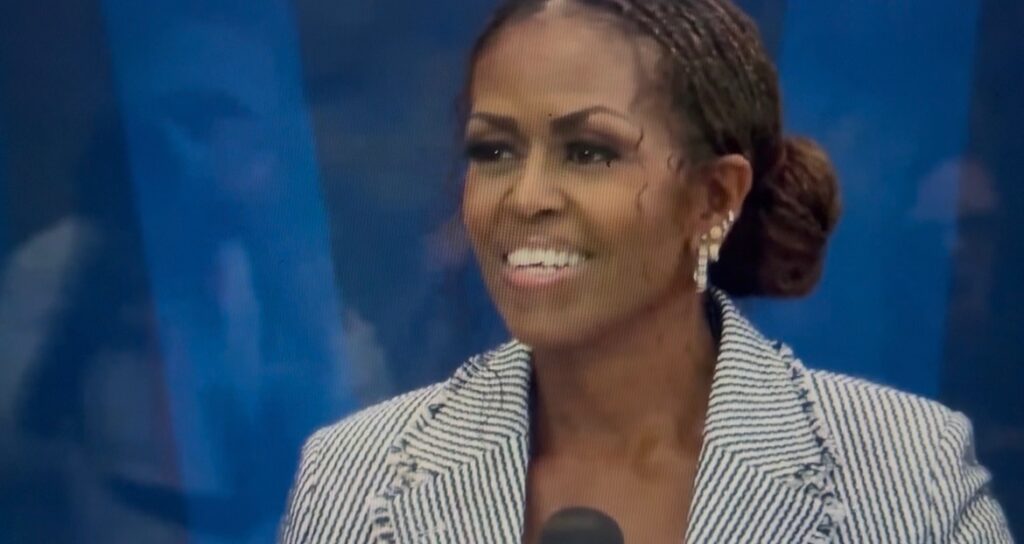
Former First Lady Michelle Obama described her husband’s eight years in office by highlighting his many accomplishments and personal attributes, including his work ethic, integrity, and empathy.
She listed, “[Your work] expanding healthcare, ending a war, ordering the Bin Laden raids, saving an auto industry, winning a peace prize, keeping us safe from Ebola, regulating the banks, standing up for marriage equality, listening to science, and comforting us through unspeakable tragedies. You did it all with such grace, and class, and cool that you made the hardest job in the world look like a walk in this beautiful park.”
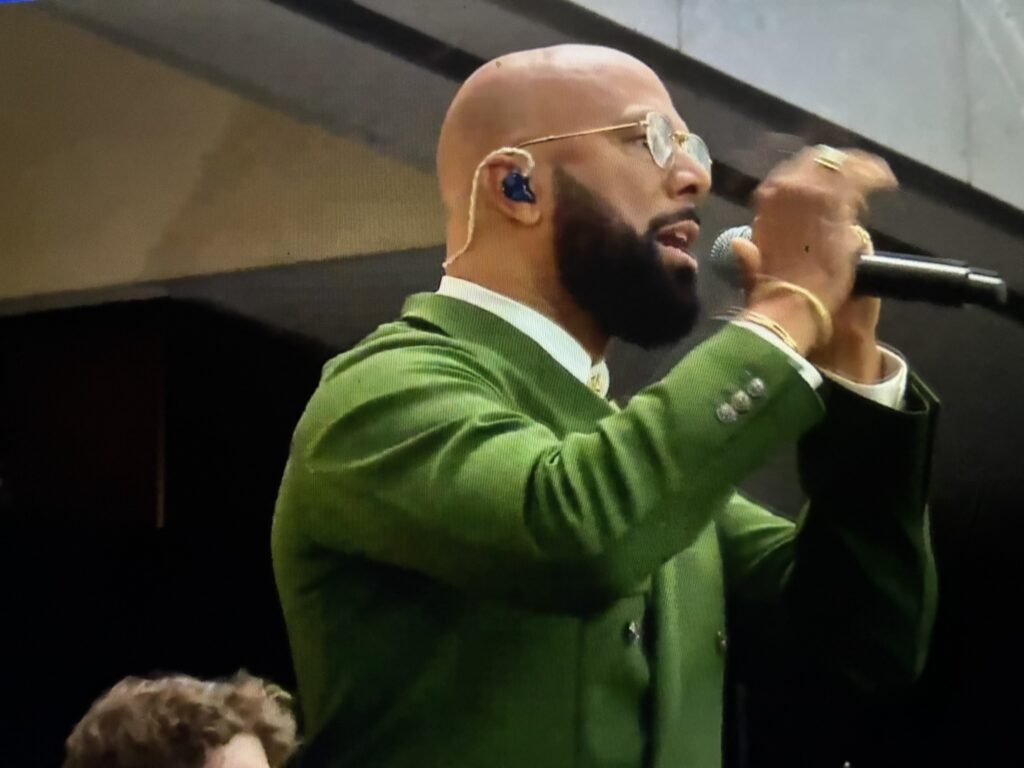
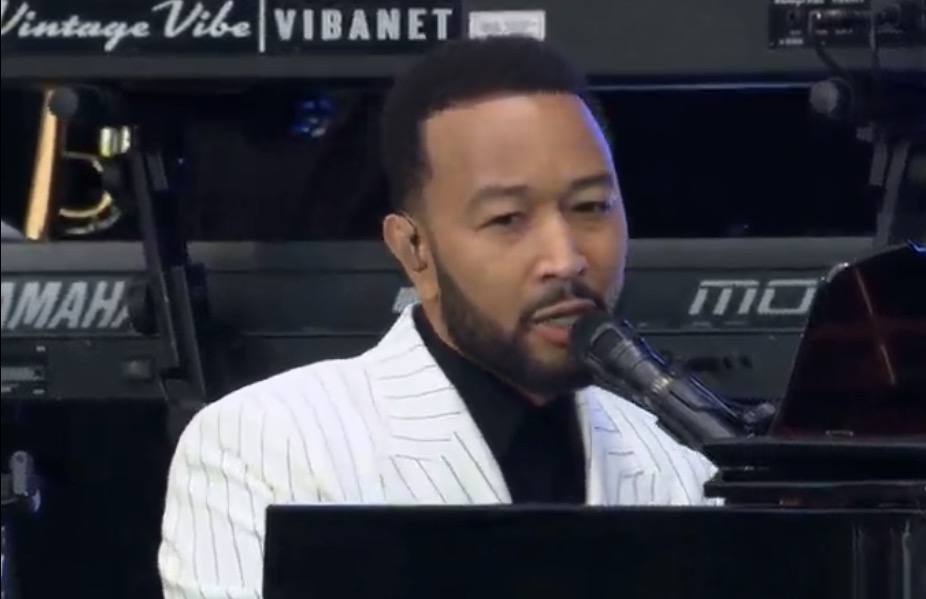
Grammy award-winning singers Jennifer Hudson, Christina Aguilera, John Legend, Bono, Tems, Stevie Wonder, and Marc Anthony performed.
A woman from Africa, who traveled to Chicago for the opening of the Obama Center, said, “In 2008, I was studying journalism at Harvard, and what happened is that Barack Obama became a candidate, and I called my family in Africa, and I said, ‘You know what? I think I know who the next president’s going to be.’ It inspired me a lot, and three years after that, I created the first American school in my country because of him.”
For more information about the Obama Presidential Center, please visit www.obama.org.


Why Most Black Americans Think Nolan Wells’ Death and Two Recent Hangings Are Murder

August is Black-owned Business Month, and There’s Good News

Tens of Thousands Have Already Visited the Obama Presidential Center


-
 Black History6 years ago
The Idlewild Resort: Once the Largest, Most Successful Resort in the Midwest for Black People
-
 Black History7 years ago
Meet Sarah Boone, the Woman Who Patented the Ironing Board
-
 Black History5 years ago
Charles Baker: African American Inventor of Friction Heat
-
 Black History7 years ago
Auburn Avenue: The Richest “Negro Street in the World”
-
 Black History6 years ago
Boley, Oklahoma: One of the Last All-Black Towns Still Standing
-
 Black History7 years ago
Meet Elijah McCoy: The father of Lubrication, the Real McCoy
-

 Black History10 years ago
Ursula Burns, From Intern to CEO
-
 Black History6 years ago
Five Facts to Know About the Civil Rights Act of 1964 on its Anniversary